Choosing the right shoe rack is about more than finding a place to keep your footwear. The right design helps you organise shoes, use available space efficiently, protect footwear from dust, and maintain a tidy entrance. However, when you shop for a Shoe Rack Online, you will come across several options, including shoe racks with drawers, open shelves, and closed doors. Each design offers different advantages depending on your storage needs, home layout, and daily routine.
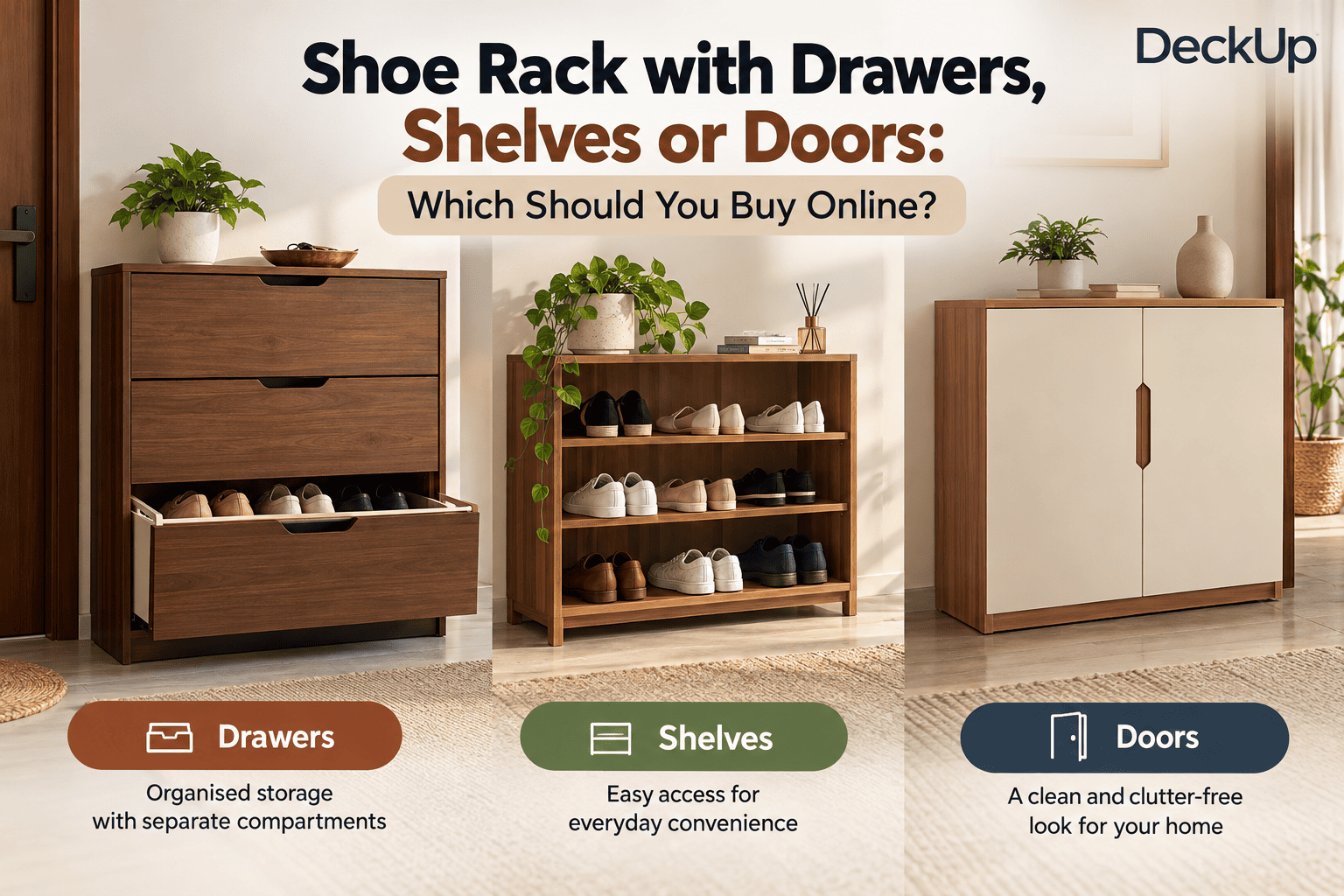
A shoe rack with shelves provides easy access to frequently used footwear, while a shoe cabinet with doors creates a cleaner appearance. Drawer-style shoe storage can help organise smaller items and selected types of footwear, depending on the drawer dimensions and design.
Before choosing a shoe rack for your home, it is important to understand how these storage styles differ and which one suits your requirements. This guide compares shoe racks with drawers, shelves, and doors to help you make a practical buying decision when shopping online. It also explains important factors such as dimensions, material, storage capacity, maintenance, and price.
Why Does the Shoe Rack Design Matter?
The design of a shoe rack affects how comfortably you can use it every day. A household with two people who wear a few pairs of shoes may need a different storage solution from a family with children, sports footwear, formal shoes, and seasonal footwear.
For example, an open shoe rack near the entrance can make everyday footwear easy to access. A closed shoe cabinet may be more suitable for a living room or hallway where you want to keep shoes out of sight. A drawer-based design can help separate smaller accessories or footwear that fits within the available compartments.
Consider these factors before selecting a design:
-
Daily convenience: How quickly can you take out and put away your shoes?
-
Storage requirements: How many pairs do you need to accommodate?
-
Available space: Will the shoe rack fit comfortably near your entrance, inside a wardrobe area, or along a hallway?
-
Appearance: Do you prefer visible footwear or a neat, concealed storage unit?
-
Maintenance: How frequently will the rack need cleaning?
-
Budget: Does the price match the storage capacity, construction, and features you need?
Understanding these requirements will make it easier to choose a shoe rack online that fits your home rather than selecting one based only on its appearance.
Shoe Rack with Drawers: Is It the Right Choice?
A shoe rack with drawers offers enclosed or partially enclosed compartments that can help keep footwear organised. Depending on the design, the drawers may slide out horizontally or tilt forward to provide access to shoes.
However, not every drawer-style shoe rack is suitable for every type of footwear. Some models have narrow compartments intended for flats, sandals, or low-profile shoes, while others provide deeper storage.
Benefits of a Shoe Rack with Drawers
1. Separate storage compartments
Drawers allow you to organise footwear into different groups. You could assign separate compartments to daily-use shoes, children's footwear, sandals, or indoor slippers, provided the compartments are large enough.
2. A more organised appearance
When the drawers are closed, the footwear is less visible. This can be useful in homes where the entrance opens directly into the living room or dining area.
3. Useful for smaller spaces
A well-designed drawer shoe cabinet can make use of vertical space while keeping footwear arranged in designated compartments. Check the unit's overall depth and drawer-opening requirements before purchasing.
4. Additional storage possibilities
Some shoe storage units include drawers or compartments that can accommodate shoe-care products, socks, or other small accessories. Confirm that the specific design offers suitable space before planning to store these items.
What Should You Check Before Buying?
Drawer-style shoe racks require a little more attention during the buying process.
-
Check the internal height, width, and depth of each drawer.
-
Confirm whether your regular sneakers or formal shoes will fit.
-
Look for smooth drawer movement and sturdy construction.
-
Check whether the drawers open fully without hitting nearby furniture.
-
Consider ventilation if the compartments will hold frequently worn footwear.
A drawer-style shoe rack is a practical option for people who prefer compartmentalised storage and a relatively uncluttered appearance. It may be less suitable if you regularly store bulky boots or oversized footwear that cannot fit into the available drawers.
Shoe Rack with Shelves: Best for Everyday Convenience
A shoe rack with shelves is one of the simplest storage options for a household. It generally features horizontal levels where footwear is placed directly, making it easy to see and retrieve different pairs.
Open shelving is particularly useful for people who frequently change footwear throughout the day or need a straightforward storage solution near the entrance.
Benefits of a Shoe Rack with Shelves
1. Easy access to footwear
You can quickly identify the pair you need without opening a door or pulling out a drawer. This is convenient for busy households and families with children.
2. Flexible arrangement
Depending on shelf spacing, you may be able to store flats, sandals, sneakers, and some larger shoes on different levels. Adjustable shelves, where available, provide additional flexibility.
3. Straightforward cleaning
Open shelves make it easier to see accumulated dust, dirt, or debris. You can remove footwear and wipe the surfaces without having to clean several enclosed compartments.
4. Useful for frequently worn shoes
If you have a few pairs that you wear almost every day, an open shoe rack keeps them within easy reach. It can also help family members return their footwear to a designated place.
5. Often a simple storage solution
Basic open racks have fewer moving parts than drawer-based units. Depending on the material, dimensions, and construction, this can make them a practical option for buyers seeking uncomplicated shoe storage.
What Are the Limitations of Open Shelves?
The main drawback is that footwear remains visible. Dust may also settle on shoes and shelves, particularly near an entrance exposed to outdoor conditions.
Open shelves may not be the best choice if you want to maintain a concealed, furniture-like appearance throughout your living space. You should also check the weight capacity and shelf spacing before placing heavy footwear on the unit.
A shoe rack with shelves is generally a good choice for rented homes, compact entryways, utility areas, and households that prioritise quick access over concealed storage.
Shoe Rack with Doors: Best for a Neat Home Interior
A shoe rack with doors combines storage functionality with a cleaner exterior. When the doors are closed, most or all of the footwear is hidden, depending on the cabinet design.
These shoe racks are often suitable for hallways, living room entrances, and other areas where furniture appearance matters alongside storage capacity.
Benefits of a Shoe Rack with Doors
1. Conceals footwear
Closed doors keep shoes out of direct view, helping the entrance look more organised even when the cabinet contains several pairs.
2. Reduces direct exposure to dust
Doors provide a barrier against some of the dust that would otherwise settle directly on exposed footwear. They do not make the cabinet completely dustproof.
3. Complements home furniture
A wooden shoe cabinet can blend with other furniture finishes, such as a console table, bookshelf, or side table. Neutral finishes may work particularly well in minimalist and contemporary interiors.
4. Helps organise shared spaces
When several people use the same entrance, a closed shoe rack can help keep the area visually tidy without requiring every pair to be hidden in a separate room.
5. Offers a range of storage configurations
Depending on the model, a shoe cabinet may include multiple shelves, doors, drawers, or a combination of compartments. This allows buyers to choose a layout that suits their storage habits.
What Should You Consider?
A closed shoe rack requires enough clearance for its doors to open. Measure the space in front of the cabinet, especially if it will be positioned in a narrow hallway.
Ventilation is another important consideration. Frequently worn or damp footwear should not be placed in an enclosed cabinet while wet. Allow shoes to dry thoroughly before storing them, and follow the manufacturer's care instructions.
You should also check the number of internal shelves, usable compartment dimensions, door hinges, and overall stability before buying.
A shoe rack with doors is a strong option for buyers who prioritise concealed storage, coordinated interiors, and a more furniture-like appearance.
Drawers vs Shelves vs Doors: Which Shoe Rack Should You Buy Online?
The best design depends on how you use your footwear and where you intend to place the rack.
Consider the following comparison before making your decision:
-
Choose drawers if you prefer compartmentalised storage and the internal dimensions suit your footwear.
-
Choose open shelves if you want easy access, simple cleaning, and visible organisation.
-
Choose doors if you want to conceal shoes and maintain a tidier-looking entrance.
-
Choose a combination design if you need different types of storage for daily footwear, less frequently used shoes, and small accessories.
For example, a family that wears several pairs of shoes every day may benefit from open shelves for frequently used footwear. A homeowner who wants to keep shoes out of sight may prefer a closed wooden shoe cabinet. Someone who values separate compartments may prefer a drawer-based unit.
Remember that the storage layout matters as much as the exterior design. A cabinet with doors may contain fixed shelves, while a drawer model may have limited room for bulky shoes. Always check the actual product specifications before deciding.
How to Choose the Right Shoe Rack Online for Your Home
When shopping for a shoe rack online, you cannot always judge its actual size and storage capacity from product photographs. Reviewing the specifications carefully can help you avoid buying a unit that does not fit your space or footwear.
1. Measure the Available Space
Measure the width, height, and depth of the area where you plan to place the shoe rack.
If the rack will be positioned near the entrance, ensure it does not obstruct the doorway or reduce the available walking space. For a cabinet with doors, account for the clearance needed to open them. For drawers, consider how far they extend when fully opened.
For narrow entrances, a compact shoe cabinet may be more suitable than a wide storage unit. However, do not choose a shallow cabinet without confirming that your footwear will fit.
2. Estimate Your Storage Capacity
Count the pairs you need to store regularly, including those belonging to other household members.
Do not rely entirely on the advertised pair capacity. The actual number of pairs a shoe rack holds depends on shoe size, footwear shape, shelf spacing, and the arrangement of compartments.
If you own high-top sneakers, boots, or bulky sports shoes, check the usable dimensions carefully. A rack advertised for numerous pairs may accommodate fewer of your shoes than expected.
It is also sensible to leave some spare capacity for future purchases and seasonal footwear.
3. Select a Suitable Material
The material affects the appearance, maintenance, durability, and overall construction of a shoe rack.
Engineered wood: Often used in contemporary shoe cabinets, engineered wood offers a furniture-style finish and can suit bedrooms, hallways, and living spaces. Check the panel specifications and care instructions, particularly regarding moisture exposure.
Solid wood: Can provide a distinctive natural appearance and sturdy construction. The price and maintenance requirements vary by wood type and finish.
Metal: Often suitable for straightforward open storage, utility areas, or spaces where a lightweight visual profile is preferred. Check the coating and construction quality.
Plastic: Can be a practical option for lightweight storage and areas where easy cleaning is important. Stability and load capacity vary by model.
Choose material according to your budget, intended location, and maintenance preferences rather than appearance alone.
4. Check the Interior Layout
Before placing an order, review the product images and specifications to understand how the storage space is arranged.
Look for:
-
Shelf height and usable depth.
-
Drawer dimensions and opening mechanism.
-
Door configuration and hinge placement.
-
Whether the shelves are fixed or adjustable.
-
Space for larger footwear.
-
The number of compartments available.
These details are particularly important when comparing a shoe rack with doors against a drawer-based design.
5. Consider Ventilation and Cleaning
Shoes can carry moisture, dust, and odours from outdoor use. A shoe rack should be easy to maintain and appropriate for the type of footwear you store.
Open shelves naturally expose footwear to the surrounding air. Closed cabinets may have limited airflow, depending on their construction. If you choose an enclosed shoe rack, allow damp shoes to dry before storing them and clean the interior regularly.
Avoid placing wet footwear directly onto moisture-sensitive surfaces.
6. Review Assembly and Installation Requirements
Some shoe racks arrive fully assembled, while others require home assembly. Before ordering, check whether the package includes the necessary fittings and instructions.
For taller cabinets, review the manufacturer's stability and wall-anchoring recommendations. Follow the supplied instructions to help prevent tipping, especially in homes with children.
Also check the delivery dimensions if the unit needs to pass through a narrow doorway, staircase, or lift.
How Much Should You Spend on a Shoe Rack Online?
The price of a shoe rack varies according to its dimensions, material, storage capacity, finish, and design complexity. A basic open rack and a multi-compartment wooden shoe cabinet serve different purposes, so comparing them on price alone may lead to the wrong decision.
Instead, evaluate the overall value of the product.
Features That Can Affect the Price
Material and finish: The construction material, surface finish, and detailing can influence the price.
Storage capacity: Larger cabinets and models with additional compartments may cost more because they require more material and construction.
Design features: Doors, drawers, adjustable shelves, and specialised compartments can affect the final price.
Assembly requirements: Check whether assembly is included or whether you will need to put the unit together yourself.
Delivery and return policies: Review delivery charges, return eligibility, warranty terms, and the process for reporting damaged items.
A practical approach is to shortlist products that fit your space and storage requirements first. Then compare their prices and specifications. This prevents you from paying for features you do not need or choosing a cheaper model that cannot accommodate your footwear.
Why Consider DeckUp When Shopping for a Shoe Rack?
When comparing shoe storage furniture, it is helpful to evaluate brands based on product specifications, design suitability, and the information they provide to buyers.
DeckUp is a furniture brand to consider when exploring storage solutions for contemporary homes. If you are comparing its shoe racks with other options, review the available product details to determine which design best suits your space.
Before choosing a DeckUp shoe rack, consider the following:
-
Dimensions: Confirm that the unit fits your intended location.
-
Storage arrangement: Check the number of shelves and compartments.
-
Material and finish: Select a style that complements your existing furniture.
-
Everyday usability: Consider how easily you can access and organise footwear.
-
Product information: Review the assembly instructions, warranty details, and care requirements provided for the specific model.
The right choice is not necessarily the largest or most elaborate shoe cabinet. It is the one that accommodates your footwear, fits your available space, and remains convenient to use over time.
Common Mistakes to Avoid When Buying a Shoe Rack Online
Even a well-designed shoe rack can become inconvenient if it does not suit your household's requirements. Avoid these common buying mistakes.
Choosing Based Only on Appearance
A stylish cabinet may look excellent in a product photograph but offer insufficient space for your shoes. Check the dimensions and internal layout before prioritising the finish.
Ignoring Door and Drawer Clearance
A shoe cabinet that fits against the wall may still obstruct a passage when its doors or drawers are open. Measure the operating space as well as the unit itself.
Overlooking Footwear Height
High-top sneakers, boots, and shoes with thick soles may not fit into narrow compartments. Verify the internal shelf height rather than assuming all footwear will fit.
Buying More Storage Than You Need
An oversized shoe cabinet may occupy valuable floor space without providing a meaningful benefit. Estimate your current storage needs and leave a reasonable allowance for future use.
Forgetting Maintenance Requirements
Different materials and finishes need different levels of care. Read the manufacturer's cleaning instructions and consider the conditions in which the shoe rack will be used.
Ignoring Product and Delivery Policies
Before placing your order, check the seller's return conditions, warranty information, assembly requirements, and delivery terms. These details are particularly useful when purchasing furniture online.
Frequently Asked Questions About Buying a Shoe Rack Online
1. Which Is Better: A Shoe Rack with Drawers, Shelves, or Doors?
The best option depends on your priorities. Drawers offer compartmentalised storage, open shelves provide quick access, and doors help conceal footwear. Choose the design that matches your available space, footwear types, and preferred appearance.
2. Is a Closed Shoe Rack Better Than an Open Shoe Rack?
A closed shoe rack is suitable if you want to keep footwear out of sight and reduce direct dust exposure. An open shoe rack is more convenient for frequently used shoes and makes cleaning the storage surfaces straightforward. Both designs require regular maintenance.
3. How Do I Choose the Right Size Shoe Rack Online?
Measure the available width, height, and depth. Then estimate the number of pairs you need to store and check the usable dimensions of the shelves or drawers. Allow enough space for doors to open and for people to move comfortably around the unit.
4. Which Material Is Best for a Shoe Rack?
Engineered wood, solid wood, metal, and plastic can all be suitable, depending on the intended use. Engineered wood works well for furniture-style cabinets, metal suits many open-storage applications, and plastic can offer lightweight storage. Compare construction quality, moisture resistance, maintenance, and price before buying.
5. Can I Store Sneakers and Boots in a Shoe Cabinet with Doors?
Yes, provided the internal dimensions accommodate their size. Check shelf height, compartment depth, and any restrictions created by the cabinet design. Allow damp footwear to dry before placing it inside a closed cabinet.
6. Is a Wooden Shoe Rack Suitable for a Small Apartment?
A wooden shoe rack can work well in a small apartment if its dimensions and storage layout suit the available space. A compact cabinet or a suitably sized vertical unit may help organise footwear without occupying too much floor area. Measure the intended location before ordering.
7. What Should I Check Before Buying a Shoe Rack Online?
Check the overall dimensions, internal storage capacity, material, finish, shelf spacing, ventilation, assembly requirements, warranty, and return policy. Also consider how the unit will be delivered and whether it can fit through your entrance.
8. How Can I Keep a Shoe Rack Clean and Organised?
Remove dust and loose dirt regularly, clean the surfaces according to the manufacturer's instructions, and store footwear only after it has dried. Group shoes by use or household member and avoid overcrowding the compartments.
Conclusion
Choosing between a shoe rack with drawers, shelves, or doors comes down to the way you organise footwear and use your living space. Drawers suit buyers who prefer separate compartments, open shelves work well for quick access, and closed shoe cabinets are useful when a tidy, concealed appearance is a priority.
Before you buy a Shoe Rack Online, compare the dimensions, material, storage capacity, internal layout, and maintenance requirements of each option. Consider your daily footwear, the available space near your entrance, and the amount you want to spend.
If you are looking for practical furniture to organise your footwear, explore the shoe rack options available from DeckUp and compare their specifications to find a design that suits your home. A carefully selected shoe rack can make everyday storage more convenient while helping you maintain a cleaner and more organised entrance.