A bookshelf is more than a place to keep books. The right bookshelf can help organise a room, use available space efficiently, display personal collections and complement the overall interior. However, choosing the right one requires more than selecting a design that looks attractive.
The ideal bookshelves should match the room's size, storage requirements, available floor space and intended use. A compact bookshelf may work well in a bedroom or study area, while a larger unit can provide both storage and visual balance in a living room.
If you are planning to buy a bookshelf online, understanding dimensions, materials, shelf configuration, storage capacity and placement can help you make a more practical decision.
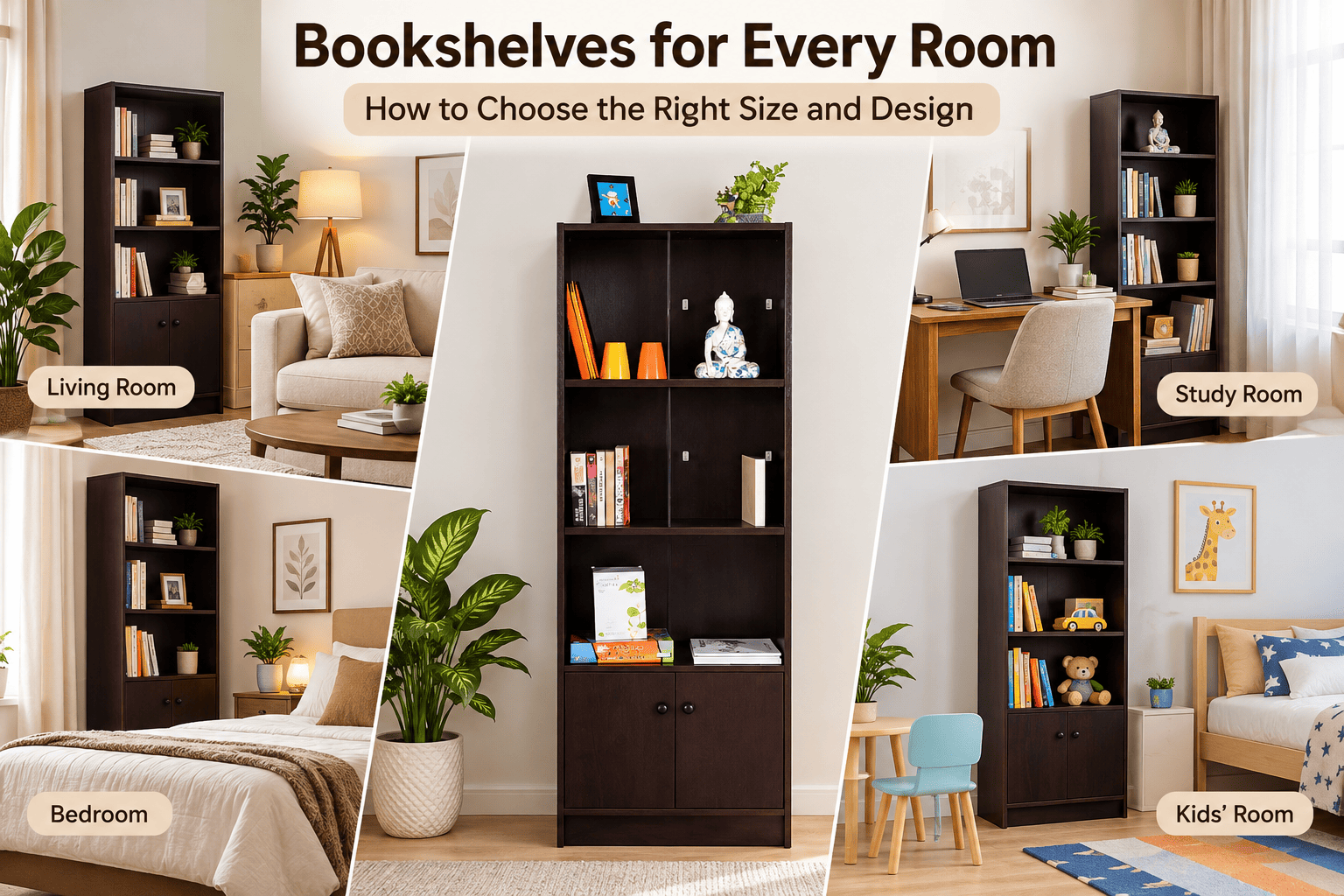
Why Choosing the Right Bookshelf Size Matters
One of the most common mistakes when buying bookshelves is focusing only on appearance. A bookshelf that looks good online may not necessarily fit your room or storage needs.
Before choosing a design, consider:
- Available floor and wall space
- Number and size of books you need to store
- Height of the room
- Whether you need open or closed storage
- Space required for decorative items
- Accessibility of the upper shelves
- Existing furniture around the bookshelf
For example, a tall bookshelf can make excellent use of vertical space in a compact room. On the other hand, a wider, lower bookshelf may be more suitable for a spacious living room where you want easy access to books and decorative objects.
How to Choose Bookshelves for Different Rooms
Different rooms have different storage requirements. Instead of choosing one bookshelf style for the entire home, select a design according to how the room is used.
Bookshelves for the Living Room
The living room is often the most visible area of the home, making both design and functionality important.
A bookshelf for the living room can be used to store books while also displaying photographs, plants, collectibles and decorative accessories.
For a living room, consider:
- Medium or large shelving units
- Multiple shelf levels
- A combination of open and closed storage
- Designs that complement your existing furniture
- Strong construction for heavier books
If the bookshelf will be placed beside a TV unit, sofa or cabinet, check the proportions carefully. A bookshelf that is significantly taller or wider than surrounding furniture can make the arrangement feel unbalanced.
Bookshelves for the Bedroom
A bedroom usually benefits from compact and space-efficient furniture.
A bookshelf for the bedroom can hold novels, magazines, journals and personal items without taking up excessive floor space. A tall, narrow bookshelf can be particularly useful when floor area is limited.
Look for:
- Compact footprints
- Vertical storage
- Easy-to-reach shelves
- Neutral finishes
- Designs that complement your bed and bedside furniture
Avoid choosing an oversized bookshelf simply because it offers more storage. If the room is already occupied by a wardrobe, bed and other furniture, excessive shelving can make movement difficult.
Bookshelves for the Study Room
A study room requires practical organisation rather than purely decorative storage.
A bookshelf for a study room can keep textbooks, reference books, notebooks and documents within easy reach of the work area.
Consider a bookshelf with:
- Multiple shelves
- Adequate shelf depth
- Strong construction
- Space for books of different sizes
- A height that allows comfortable access
If the bookshelf is being placed next to a study table, leave enough clearance to move the chair comfortably and access the shelves without obstruction.
Bookshelves for Home Offices
Home offices often need to store more than books. Files, folders, stationery, notebooks and work-related materials may also require dedicated space.
In this situation, a bookshelf with varied storage sections can be more useful than a basic uniform shelving unit.
Use open shelves for frequently accessed materials and closed compartments, where available, for items that you want to keep protected or visually concealed.
Bookshelves for Kids' Rooms
Children's rooms require accessibility and practical organisation.
Choose a bookshelf that allows children to reach commonly used books without needing to climb or stretch. Lower or medium-height designs can be more convenient for younger children.
When selecting one, consider:
- Stable construction
- Rounded or smooth edges
- Appropriate height
- Easy-to-access shelves
- Sufficient space between furniture pieces
The bookshelf should also leave enough open floor space for children to move around safely.
Choosing the Right Bookshelf Dimensions
There is no universal bookshelf size that works for every home. The correct dimensions depend on the room and what you intend to store.
Bookshelf Height
Tall bookshelves are useful when floor space is limited because they take advantage of vertical space.
However, very tall units can make the top shelves difficult to access. Consider how frequently you will use those shelves before selecting a taller design.
Bookshelf Width
A wider bookshelf provides more storage across each level but requires more wall and floor space.
Measure the intended location before purchasing. Also check nearby doors, windows, switches and other furniture.
Bookshelf Depth
Depth is particularly important because a shelf that is too shallow may not accommodate larger books, while excessive depth can unnecessarily consume floor space.
For standard books, moderate shelf depth is often sufficient. If you plan to store large art books, files or decorative objects, check the dimensions of those items first.
Open vs Closed Bookshelves: Which Should You Choose?
The choice between open and closed storage depends on what you want the furniture to achieve.
Open bookshelves work well when you want:
- Quick access to books
- Visible book collections
- Decorative displays
- An open and lightweight appearance
Bookshelves with closed storage can be useful when you want:
- Concealed storage
- A cleaner visual appearance
- Space for miscellaneous items
- Less visible clutter
For homes that need both display and concealed storage, a combination of open shelving and cabinets can offer greater flexibility.
Wooden Bookshelves: What Makes Them Practical?
Wooden bookshelves remain a popular choice because they can work across traditional, contemporary and minimalist interiors.
When evaluating a wooden bookshelf, look beyond the finish. Consider the construction, shelf configuration, dimensions and intended load.
Important factors include:
- Material and construction quality
- Shelf thickness
- Overall stability
- Finish
- Storage layout
- Ease of maintenance
A good bookshelf should be selected according to the weight and type of items you intend to place on it rather than appearance alone.
How to Choose a Bookshelf Design for Your Interior
Your bookshelf should work with the furniture already present in the room.
For a minimalist interior, a clean-lined bookshelf with a simple finish may blend more naturally. For a warmer interior, wooden finishes can complement other furniture and flooring.
Consider the following before choosing a design:
Match the Furniture Finish
If your room already has several wooden furniture pieces, selecting a complementary finish can create a more coordinated appearance.
Consider Visual Weight
A bulky bookshelf can dominate a small room. A slimmer design may provide storage without overwhelming the space.
Think About Display Space
If you plan to use the bookshelf for plants, photographs or decorative pieces, choose a configuration that leaves enough open shelf space.
Plan Around Existing Furniture
Measure the distance between the bookshelf and nearby beds, sofas, desks, cabinets and doors. Good furniture placement should preserve comfortable movement around the room.
Bookshelf Buying Guide: What to Check Before You Buy
Whether purchasing from a furniture store or looking for a bookshelf online, compare practical specifications instead of relying only on photographs.
1. Measure the Available Space
Measure the available width, height and depth. Remember to account for skirting boards, doors and nearby furniture.
2. Estimate Your Storage Requirement
Count approximately how many books and other items you want to store. This helps you avoid buying a bookshelf that is either too small or unnecessarily large.
3. Check Shelf Configuration
Look at the number of shelves and their spacing. Adjustable or varied shelf heights can be useful if you own books of different sizes.
4. Consider the Material
Choose a material and construction suited to the expected use. For heavier collections, stability and structural strength should be priorities.
5. Check Dimensions Carefully
Never assume that a bookshelf will fit simply because it looks compact in product photographs. Always compare its listed dimensions with your available space.
6. Think About Future Storage
If your book collection is growing, buying a bookshelf with a little additional capacity can prevent the need for immediate replacement.
Common Bookshelf Buying Mistakes to Avoid
A few simple mistakes can affect how useful your bookshelf becomes after purchase.
Buying Based Only on Appearance
A stylish design is important, but storage capacity, dimensions and construction matter just as much.
Ignoring Shelf Depth
A shelf may look spacious but fail to accommodate larger books or files if its depth is insufficient.
Choosing an Oversized Bookshelf
More storage is not always better. A large bookshelf can reduce usable floor space and make a compact room feel crowded.
Not Measuring Doorways and Access Routes
Before ordering a large furniture unit, consider whether it can be moved through your entrance, hallway, staircase or lift.
Forgetting About Future Storage
If you regularly purchase books, allow some additional capacity rather than filling every shelf immediately.
Why Consider DeckUp Bookshelves?
When selecting furniture for different rooms, versatility and practical storage are important considerations. DeckUp bookshelves can be considered as part of a home organisation setup where you need dedicated space for books, accessories and everyday belongings.
Rather than choosing a bookshelf purely because of its appearance, compare the available dimensions, storage arrangement, finish and intended placement with your specific requirements.
The best choice will ultimately be the one that fits your room properly and provides the right balance between storage and design.
Frequently Asked Questions About Bookshelves
1. How do I choose the right size bookshelf?
Start by measuring the available floor and wall space. Then consider the number and size of books you need to store. Choose a height, width and depth that provide enough storage without obstructing movement.
2. Are wooden bookshelves good for home use?
Yes, wooden bookshelves can be a practical option for living rooms, bedrooms, studies and home offices. However, construction, stability, shelf design and intended load should be considered before buying.
3. What type of bookshelf is best for a small room?
A tall and relatively narrow bookshelf can make better use of vertical space while occupying less floor area. Compact designs can also work well beside desks, beds or other furniture.
4. Should I choose open or closed bookshelves?
Open bookshelves are suitable for books and decorative displays, while closed storage helps conceal miscellaneous items. If you need both functions, consider a design combining open shelves with closed compartments.
5. How deep should a bookshelf be?
The ideal depth depends on what you plan to store. Standard books generally need less depth than large reference books, files or decorative objects. Always check the product's internal shelf dimensions.
6. Where should I place a bookshelf in my home?
Common locations include living rooms, bedrooms, study rooms, home offices and hallways with sufficient space. Choose a location that provides easy access while keeping doors, windows and walking paths clear.
7. What should I check when buying a bookshelf online?
Check the exact dimensions, material, shelf configuration, finish, storage capacity, product images and care requirements. Also measure your available space before placing the order.
Conclusion
The right bookshelves can make a noticeable difference to how organised and functional a room feels. The ideal choice depends on more than the number of shelves. Room size, storage requirements, bookshelf dimensions, material, design, accessibility and placement all influence whether a bookshelf will work well in your home.
For a living room, you may prioritise display and visual appeal. A study room may require greater storage capacity and easy access, while a bedroom may benefit from a compact vertical design. Understanding these differences makes it easier to narrow down your options.
If you are looking for bookshelves online, explore the range from DeckUp and compare each design based on your room dimensions, storage needs and interior style. Choosing the right bookshelf today can give you a more organised and functional space for years to come.