A well-organised entrance makes a home feel more welcoming and keeps everyday footwear from spreading across the floor. However, storing shoes is not the only consideration when planning an entryway. Having a comfortable place to sit while putting on or removing footwear can make the space more functional. This is where a Shoe Rack with Seat becomes a practical furniture choice.
Combining shoe storage with a seating area, this furniture serves two everyday purposes without requiring separate pieces. It is particularly useful for apartments, compact entryways, bedrooms and homes where family members regularly change footwear near the entrance.
However, buying one online requires more attention than simply choosing an attractive design. Dimensions, storage capacity, seating comfort, material quality, ventilation and weight capacity all influence whether the furniture will suit your requirements.
Before selecting a model, here are 10 important things to check when buying a shoe rack with seat online.
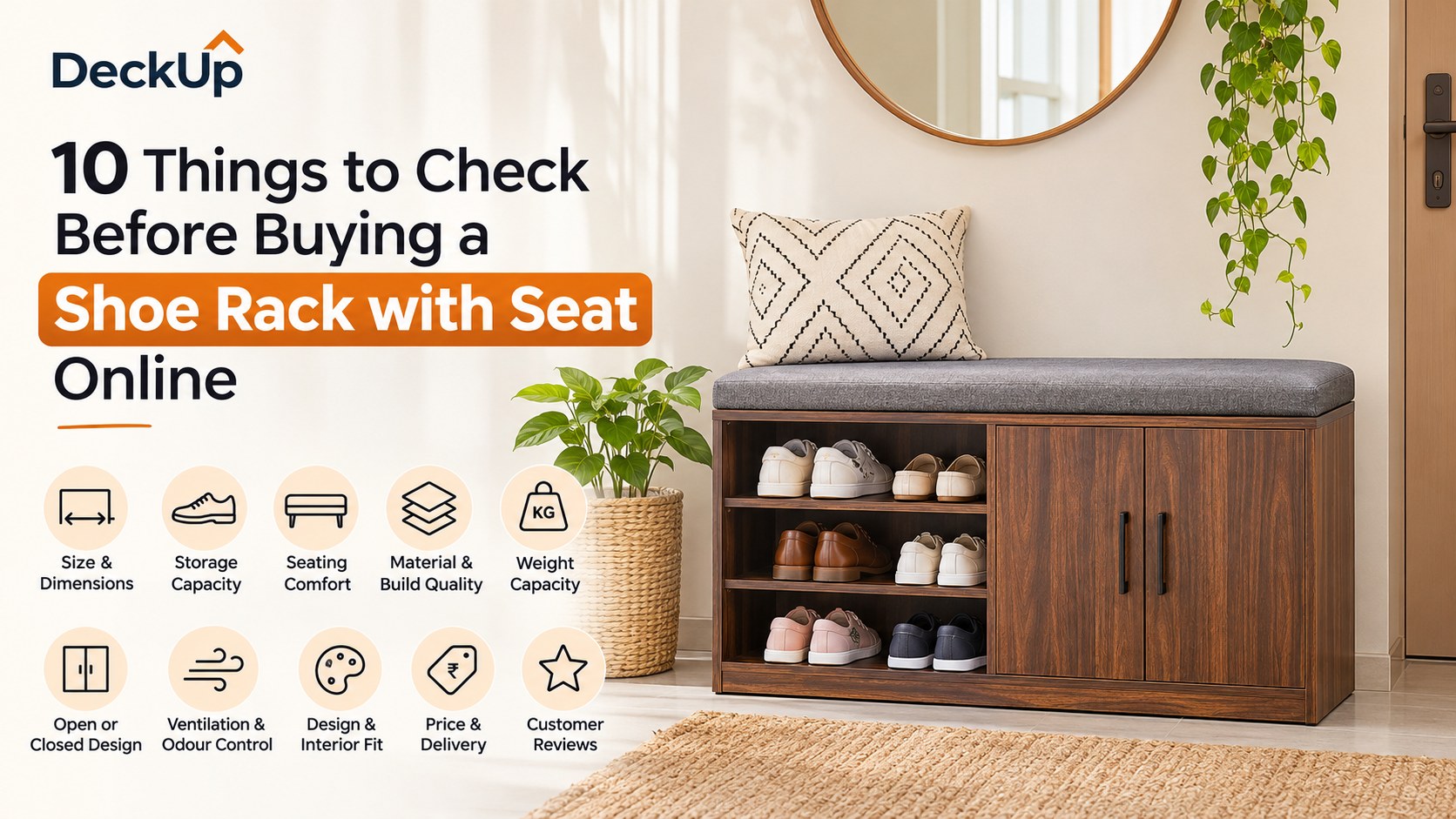
1. Check the Available Space and Overall Dimensions
The first thing to consider is where you plan to place the shoe rack. A design that looks compact in product photographs may occupy more floor space than expected.
Measure the available area before browsing different models. Pay attention to:
-
Width: Determines how much horizontal space the shoe rack occupies.
-
Depth: Important for ensuring the furniture does not obstruct walkways or doors.
-
Height: Influences both seating comfort and the overall appearance of the entryway.
-
Door clearance: Check whether nearby doors, cupboards or drawers can open without hitting the unit.
For example, a narrow apartment entrance may benefit from a compact shoe rack with seat, while a larger foyer can accommodate a wider design with additional storage compartments.
Also, consider the space required to sit comfortably. There should be enough room to move your legs and put on footwear without feeling restricted.
Always compare the listed product dimensions with your actual measurements rather than estimating the size from photographs.
2. Evaluate the Shoe Storage Capacity
Storage capacity is one of the most important factors when choosing a shoe rack with seating. A model may look spacious externally but offer limited room for footwear because of its internal compartment arrangement.
Think about how many pairs you need to store regularly.
Consider the following:
-
Daily-use footwear such as slippers, sandals and casual shoes.
-
Formal shoes that require more careful storage.
-
Sports shoes and sneakers that may need additional compartment height.
-
Children's footwear, which may fit into smaller sections.
-
Seasonal footwear that does not need to remain easily accessible.
If you live alone or with one other person, a compact shoe rack may be sufficient. Larger families may need a model with multiple shelves or wider compartments.
Check the internal shelf dimensions wherever the manufacturer provides them. This is particularly important if you own larger footwear, high-top sneakers or bulky sports shoes.
A good shoe storage bench should make everyday footwear easy to access without requiring you to rearrange other pairs whenever you need something.
3. Examine the Seating Comfort and Height
The seating area is what makes this furniture different from a conventional shoe cabinet. Therefore, comfort should be an important part of your buying decision.
A shoe rack with a seat should allow you to sit naturally while putting on or removing footwear.
Check these seating-related features:
-
Seat height: It should allow comfortable sitting without excessive bending or stretching.
-
Seat depth: There should be enough room to sit without feeling unstable.
-
Seat width: Consider how much seating space is needed for regular use.
-
Surface finish: A smooth, well-finished surface is easier to maintain.
-
Cushioning: Some designs offer padded seating, while others have a solid wooden or engineered-wood top.
A cushioned shoe rack with seat may be suitable for people who prefer a softer seating surface. Meanwhile, a wooden seating top can be easier to wipe clean and may suit minimalist interiors.
Think about who will use the seat most frequently. If elderly family members or children will use it, prioritise a stable structure and a convenient sitting height.
4. Check the Material and Build Quality
The material determines how the shoe rack looks, how much maintenance it requires and how well it handles regular household use.
Common materials used in shoe racks include engineered wood, solid wood, metal and plastic.
Engineered Wood
Engineered wood is commonly used in modern shoe cabinets because it supports different finishes and furniture designs. It can be a practical option for homes looking for an organised appearance and enclosed storage.
Before buying, check the board thickness, surface finish, edge treatment and product construction details.
Solid Wood
Solid wood offers a natural appearance and can suit traditional as well as contemporary interiors. However, the type of wood, finishing and maintenance requirements should be considered.
Metal
Metal shoe racks are generally associated with simpler, open storage designs. They can be useful when ventilation and easy visibility are priorities.
Plastic
Plastic shoe racks are often lightweight and easy to clean. However, buyers should carefully evaluate their structural stability and weight capacity, particularly when the top is intended for seating.
For a furniture piece that combines storage and seating, pay attention to the overall construction rather than selecting a material based only on appearance.
5. Verify the Weight Capacity and Structural Stability
A shoe rack with seat serves as both a storage unit and a place to sit. This makes weight capacity particularly important.
Do not assume that every shoe rack can safely support an adult simply because its top surface looks sturdy.
Check the manufacturer's specifications for:
-
Maximum seating weight capacity.
-
Weight capacity of individual shelves.
-
Load distribution recommendations.
-
Leg and base construction.
-
Support panels and overall stability.
Also, read customer reviews to identify recurring concerns about wobbling, loose fittings or structural issues.
A well-constructed unit should sit evenly on the floor and remain stable during normal use. If your flooring is uneven, consider whether the design offers suitable support or adjustable feet.
Avoid placing more weight on the seating surface than the manufacturer recommends. This is especially important for compact shoe storage benches with relatively narrow support structures.
6. Decide Between Open and Closed Storage
The storage design affects the appearance, accessibility and maintenance of your shoe rack.
Open Shoe Rack with Seat
Open designs have visible shelves where footwear can be placed and removed easily.
Advantages include:
-
Quick access to frequently used footwear.
-
Better visibility of stored shoes.
-
Convenient organisation for daily-use pairs.
-
Easier cleaning around individual shelves.
However, footwear remains visible, so the entrance may look cluttered if shoes are not arranged properly.
Closed Shoe Rack with Seat
Closed designs use doors or enclosed compartments to keep footwear out of sight.
Their main benefits include:
-
A cleaner and more organised appearance.
-
Less direct exposure of stored footwear to dust.
-
Better visual integration with modern interiors.
-
A more furniture-like appearance in the entryway.
However, enclosed storage needs proper ventilation and regular cleaning to prevent unpleasant shoe odours.
Choose an open design if accessibility is your priority. If you prefer a neat and minimal-looking entrance, a closed shoe cabinet with seating may be more suitable.
7. Look for Proper Ventilation and Odour Management
Shoes can retain moisture, sweat and dirt after regular use. Storing them in a completely enclosed space without adequate airflow may contribute to unpleasant odours.
This makes ventilation an important consideration, particularly when buying a closed shoe rack with seat.
Look for features such as:
-
Ventilation openings or gaps in the cabinet design.
-
Adequate space between shelves.
-
Compartments that do not overcrowd footwear.
-
Easy-to-clean internal surfaces.
You should also avoid placing wet shoes directly inside an enclosed cabinet. Allow them to dry before storage.
For additional odour management, clean the interior periodically and use suitable moisture-absorbing products where appropriate.
A ventilated shoe storage bench can be a practical option for households where footwear is used frequently throughout the day.
8. Consider the Design, Colour and Interior Compatibility
A shoe rack is often placed near the main entrance, making it one of the first furniture pieces people notice when entering a home.
Therefore, its design should complement the existing interior rather than look like an unrelated storage addition.
Consider the following design elements:
Colour: Neutral shades such as white, beige, grey and natural wood finishes can work well with different interior styles.
Finish: Matte finishes can create a subtle, understated appearance, while wood-inspired finishes can add warmth.
Handle Design: Minimal handles or handleless doors can create a cleaner look.
Shape: Rectangular designs generally work well along entryway walls, while compact units may suit narrow spaces.
Seating Style: A plain wooden top offers a minimal appearance, whereas upholstered seating can add a softer visual element.
For example, a light wood-finish shoe rack with seat can complement a neutral entryway, while a darker finish may work well with contrasting walls and furniture.
DeckUp offers furniture solutions for practical home organisation, making it worth considering how a shoe storage unit can fit into your overall furniture arrangement.
9. Compare Prices, Features and Delivery Conditions
When shopping online, comparing prices is useful, but the cheapest option is not necessarily the best value.
Two shoe racks may look similar in photographs but differ considerably in dimensions, construction, storage layout and seating features.
Before purchasing, compare:
-
Overall dimensions and available storage space.
-
Material and finish specifications.
-
Seating weight capacity.
-
Number and arrangement of shelves.
-
Assembly requirements.
-
Warranty and after-sales support.
-
Delivery charges and estimated delivery timelines.
-
Return and replacement policies.
Also, check whether the product requires self-assembly or arrives assembled. If assembly is required, understand whether installation instructions and necessary hardware are included.
Pay attention to the final payable price rather than relying only on the displayed discount.
A slightly more expensive shoe rack with better construction, useful storage and a suitable seating area may offer better long-term value than a cheaper model that does not meet your household requirements.
10. Read Customer Reviews and Check Product Details Carefully
Product photographs provide an idea of appearance, but customer reviews can offer useful information about the actual buying and usage experience.
Before placing an order, read both positive and negative reviews.
Look for feedback related to:
-
Actual product dimensions compared with the listing.
-
Ease of assembly and clarity of instructions.
-
Material and finishing quality.
-
Seating comfort and stability.
-
Storage capacity for different footwear sizes.
-
Packaging and delivery condition.
-
Durability during regular household use.
Pay particular attention to repeated complaints. One negative review may describe an isolated experience, but similar concerns mentioned by multiple buyers deserve closer attention.
Also, examine all available product photographs. Images showing the furniture from different angles can help you understand the shelf arrangement, seat design, door placement and overall proportions.
If any important specification is missing, contact the seller before purchasing rather than making assumptions.
Common Mistakes to Avoid When Buying a Shoe Rack with Seat
Even after comparing different products, buyers sometimes overlook important details. Avoid these common mistakes:
-
Ignoring measurements: A shoe rack that is too deep or wide can make a narrow entrance difficult to use.
-
Choosing appearance over functionality: Attractive designs may not provide enough storage for your footwear.
-
Overlooking weight capacity: The seating surface must be designed to support the intended load.
-
Ignoring ventilation: Enclosed storage without suitable airflow can contribute to odour problems.
-
Not checking shelf height: Larger shoes may not fit comfortably in closely spaced compartments.
-
Skipping customer reviews: Reviews can highlight practical issues that product photographs do not show.
-
Ignoring assembly requirements: Make sure you understand what is involved before ordering.
Avoiding these mistakes can help you select a shoe rack that meets your actual household needs.
Why a Shoe Rack with Seat Is a Practical Addition to Your Home
A shoe rack with seating offers more than additional storage. It brings two useful functions together in one furniture piece, helping make everyday routines easier.
Here are some situations where it can be particularly useful:
For Small Apartments: A combined storage and seating unit can reduce the need for separate furniture near the entrance.
For Families: Multiple shelves help organise footwear belonging to different family members, while the seating surface provides a convenient place to change shoes.
For Elderly Family Members: Having a designated place to sit while wearing or removing footwear can make the process more convenient. Choose a stable design with an appropriate seat height.
For Organised Entryways: Enclosed compartments can keep footwear out of sight and help maintain a cleaner-looking entrance.
For Bedrooms: A compact shoe storage bench can also work in a dressing area where you prefer to keep frequently used footwear organised.
The best choice depends on your available space, storage requirements and how frequently the seating area will be used.
How to Choose the Right Shoe Rack with Seat from DeckUp
Once you understand the important buying factors, selecting a suitable design becomes easier. When considering a shoe rack with seat from DeckUp, focus on how the product fits into your everyday routine.
Start by identifying the number of footwear pairs you need to store. Then determine the available floor space and the preferred seating arrangement.
If you want a clean-looking entrance, consider an enclosed design. If quick access to footwear is more important, an open shelving arrangement may be a better fit.
Also, check the product specifications for dimensions, materials, seating capacity and assembly requirements before making your final decision.
Rather than choosing a product simply because it looks attractive online, prioritise practical features that support your household's everyday needs.
Frequently Asked Questions (FAQs)
1. Is a shoe rack with seat worth buying?
Yes, a shoe rack with seat can be a practical investment for homes that need both footwear storage and a convenient seating area. It combines two functions in one furniture piece and can help reduce clutter near the entrance.
2. Which material is best for a shoe rack with seat?
Engineered wood, solid wood and metal are common options. Engineered wood offers different finishes and furniture styles, solid wood provides a natural appearance, and metal is suitable for simpler storage designs. The best material depends on your budget, interior preferences and maintenance requirements.
3. What size shoe rack with seat should I buy?
The ideal size depends on your available space and storage needs. Measure the width, depth and height of the intended area before purchasing. Also, check the internal shelf dimensions to ensure your footwear fits comfortably.
4. Can adults sit on a shoe rack with seat?
Adults can sit on a shoe rack designed and rated for the intended seating load. Always check the manufacturer's maximum weight capacity and structural specifications before using it as a seat.
5. Is an open or closed shoe rack with seat better?
An open shoe rack offers quick access and visibility, while a closed shoe rack keeps footwear out of sight and creates a neater appearance. Choose according to your storage preferences, cleaning routine and ventilation requirements.
6. How many pairs of shoes can a shoe rack with seat hold?
Storage capacity varies depending on the product's width, depth, shelf arrangement and compartment height. Check the manufacturer's stated capacity and internal dimensions instead of relying only on the external appearance.
7. How do I prevent bad smells in a shoe rack with seat?
Allow damp footwear to dry before storing it, clean the compartments regularly and avoid overcrowding. Choosing a design with suitable ventilation can also help maintain airflow inside the storage unit.
8. Where should I place a shoe rack with seat at home?
The entrance or foyer is a common location because it makes changing footwear convenient. You can also place a compact model in a bedroom dressing area or hallway, provided there is sufficient space for comfortable seating and movement.
Conclusion
Buying the right shoe rack with seat online requires more than comparing designs and prices. You need to consider dimensions, storage capacity, seating comfort, material quality, structural stability, ventilation and overall functionality.
A suitable design should fit your available space, accommodate your everyday footwear and provide a stable seating area. Checking product specifications, reading customer reviews and understanding delivery and assembly conditions can also help you make a more confident purchase.
If you are planning to organise your entryway while making everyday footwear routines more convenient, explore the furniture options available from DeckUp. Choose a shoe rack that balances practical storage, comfortable seating and a design that complements your home.